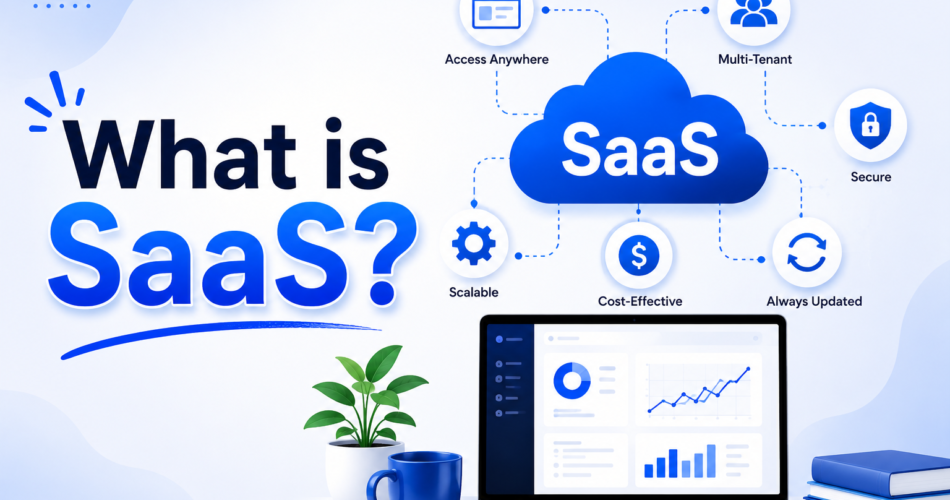
Many people ask what is SaaS because the term appears constantly in business and technology conversations. In simple terms, what is SaaS refers to Software as a Service — a model where software is delivered over the internet through a subscription instead of being installed on individual computers. This guide explains what is SaaS in clear language, shows how it works, shares real examples, and highlights why it matters in 2026.
What Is SaaS? A Simple Definition
What is SaaS? Software as a Service is a cloud-based delivery method. A provider hosts the application on its servers, manages security, handles updates, and makes the software available to users through a web browser or mobile app. Customers pay a recurring fee (monthly or yearly) and access the tool whenever they need it.
Unlike traditional software that required a large one-time purchase, local installation, and ongoing maintenance by the customer, the modern answer to what is SaaS shifts almost all technical responsibility to the provider. You simply log in and start using the application.
A helpful way to understand what is SaaS is to compare it with streaming services. Just as you pay a monthly fee to watch movies without owning DVDs, you pay a subscription to use software without owning or managing the underlying technology.
How SaaS Works in Practice
To fully understand what is SaaS, it helps to look at the typical process:
- A software company builds and hosts an application on cloud infrastructure.
- Customers sign up and choose a subscription plan.
- Users access the software from any internet-connected device using a browser or app.
- The provider manages updates, security patches, data backups, and system performance.
- Customers can usually scale up or down by changing their plan as needs change.
Most platforms that answer the question what is SaaS use a multi-tenant architecture. This means many customers share the same core software and infrastructure while their data remains securely separated. This design allows providers to offer lower prices and faster feature updates.
Key Characteristics of SaaS in 2026
When people search for what is SaaS, they often want to know the main features of this model. Here are the most important ones today:
- Subscription-based pricing instead of large upfront licenses
- Cloud-hosted delivery with no local installation required
- Automatic updates and security patches managed by the provider
- Access from almost any device with an internet connection
- Easy scaling as the number of users or features grows
- Growing use of AI features for automation, insights, and personalization
These characteristics make the model described by what is SaaS highly attractive for both small businesses and large enterprises.
Read also : Best SaaS Blogs to Follow in 2026
Benefits of Using SaaS
Understanding what is SaaS also means knowing why so many companies prefer it. The main benefits include:
- Lower initial costs compared with traditional software
- Faster deployment — most tools can be used within minutes or hours
- Reduced IT workload because the provider handles maintenance
- Better accessibility for remote and hybrid teams
- Predictable expenses through subscription pricing
- Continuous improvement through regular feature updates
In 2026, many tools that fit the definition of what is SaaS also include built-in AI capabilities. These features help with tasks such as data analysis, customer support automation, content creation, and personalized recommendations.
Real-World Examples of SaaS
Everyday applications that answer the question what is SaaS include:
- Productivity tools: Google Workspace, Microsoft 365, Notion
- Customer relationship management: Salesforce, HubSpot
- E-commerce platforms: Shopify
- Marketing and email tools: Mailchimp, Klaviyo, Omnisend
- Project management: Asana, ClickUp, Trello
- Communication platforms: Slack, Zoom, Microsoft Teams
- Accounting software: QuickBooks Online, Xero
All of these products follow the same core model. They are hosted in the cloud, accessed through the internet, and paid for on a subscription basis.
Read also : The 7 Best Marketing Automation Tools Available to You
SaaS Compared with Traditional Software
A clear way to explain what is SaaS is to contrast it with older software models:
| Aspect | Traditional Software | SaaS |
| Delivery | Installed on local devices | Accessed via internet |
| Payment | Large one-time license fee | Recurring subscription |
| Updates | Customer responsibility | Handled by the provider |
| Scalability | Often limited and expensive | Easy and usually instant |
| Access | Tied to specific devices | Available from almost anywhere |
| Initial Cost | High | Lower |
This comparison helps clarify what is SaaS for anyone evaluating software options.
SaaS, IaaS, and PaaS — Quick Differences
The concept of what is SaaS sits alongside two other common cloud models:
- IaaS (Infrastructure as a Service) provides virtual servers, storage, and networking. Customers manage the operating system and applications.
- PaaS (Platform as a Service) offers a ready environment for developers to build and deploy applications without managing infrastructure.
- SaaS delivers complete, ready-to-use applications — the model most business users experience daily.
For most founders, marketers, and business teams, understanding what is SaaS is the most relevant of the three.
Potential Drawbacks to Consider
Even a complete answer to what is SaaS should mention the limitations:
- Dependence on the provider for uptime and security
- Limited customization compared with fully self-hosted software
- Ongoing subscription costs that can add up over time
- Data stored on the provider’s systems, so privacy and compliance policies matter
Most small and mid-sized businesses find that the advantages outweigh these concerns, especially when choosing reputable providers.
Why Understanding What Is SaaS Matters in 2026
The model described by what is SaaS continues to dominate because it matches how modern teams operate. Companies need flexibility, remote access, frequent updates, and the ability to adopt new tools quickly. AI features now common in many platforms further increase the value of this approach.
When you compare software options, a solid understanding of what is SaaS helps you evaluate total cost, ease of use, integration possibilities, and long-term reliability rather than focusing only on feature lists.
Conclusion
So, what is SaaS? It is a simple but powerful model: software delivered over the internet on a subscription basis. The provider manages the technology while customers focus on results.
This approach has transformed how businesses buy and use software. From CRM and e-commerce platforms to marketing automation and collaboration tools, the answer to what is SaaS powers much of today’s digital workplace.
If you are selecting tools for your business, start with a clear understanding of your needs and then apply the principles in this guide. Choosing the right platforms can reduce technical complexity and help your team work more effectively in 2026 and beyond.
Comments