
In the fast-evolving world of online retail, selecting the best ecommerce platforms for your business can make or break your success. As global ecommerce sales are projected to exceed $8 trillion by the end of 2026, businesses need robust tools to manage inventory, process payments, and engage customers seamlessly. With so many options available, from beginner-friendly builders to enterprise-grade solutions, it’s essential to choose one that aligns with your scale, budget, and technical expertise.
This guide explores the best ecommerce platforms for your business, highlighting eight top contenders based on performance, features, and user feedback. Whether you’re launching a small boutique or scaling a large operation, these platforms offer the scalability and innovation needed to thrive in 2026.
Why Choose the Best Ecommerce Platforms for Your Business in 2026?
The ecommerce landscape in 2026 is dominated by AI-driven personalization, mobile-first designs, and seamless multi-channel selling. Gone are the days of clunky interfaces; today’s best ecommerce platforms for your business prioritize user experience, with features like automated inventory management, integrated SEO tools, and one-click social commerce integrations. According to industry experts, platforms that support headless commerce and composable architectures allow for greater flexibility, enabling businesses to adapt quickly to trends like live shopping and subscription models.
Read also : 7 Free SEO Audit Tools For Site Audits in 2026
Key benefits include:
- Scalability: Handle everything from 10 to 10,000 orders daily without downtime.
- Security: Built-in PCI compliance and fraud detection to protect customer data.
- Analytics: Real-time insights into sales trends and customer behavior.
When evaluating the best ecommerce platforms for your business, consider factors like transaction fees (often 0-2%), customization options, and integration with tools like Printful for print-on-demand. Platforms vary from hosted SaaS models (e.g., Shopify) to open-source options (e.g., WooCommerce), each suiting different needs. Let’s dive into our top eight picks.
1. Shopify

Shopify remains a frontrunner among the best ecommerce platforms for your business in 2026, powering over 30% of US online stores. Its intuitive drag-and-drop builder lets you launch a professional store in hours, complete with AI-powered product recommendations and a vast app marketplace boasting 8,000+ integrations.
Key Features and Pricing
- Themes and Customization: 100+ free themes optimized for mobile, with headless API support for advanced users.
- Payments and Shipping: Shopify Payments processes transactions with no extra fees on higher plans; integrates with 100+ carriers like USPS and FedEx.
- Analytics: Built-in reports on conversion rates and abandoned carts, plus AI tools for dynamic pricing.
Pricing starts at $29/month (Basic), scaling to $2,000+/month for enterprise plans. Ideal for small to medium businesses, Shopify’s 99.99% uptime ensures reliability during peak sales like Black Friday. Drawbacks include app costs adding up, but its ease makes it a top choice for non-tech-savvy entrepreneurs.
2. BigCommerce
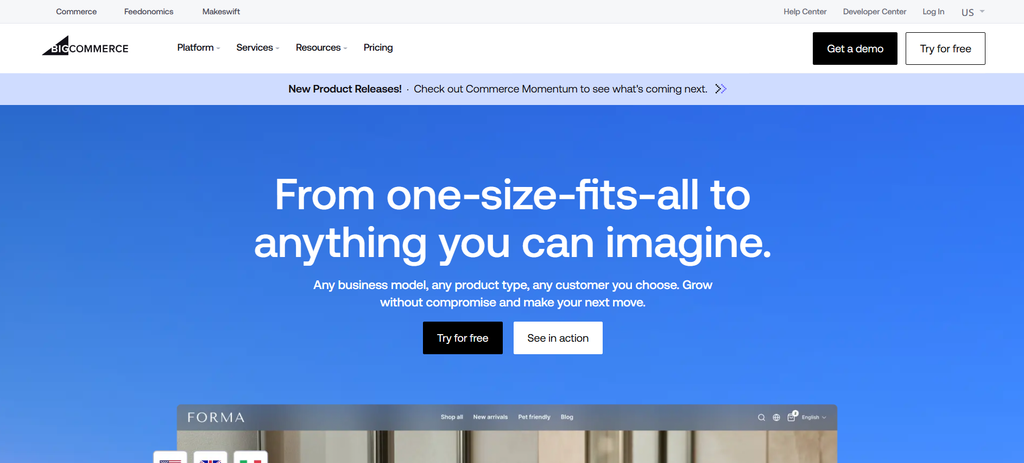
BigCommerce excels in scalability, making it one of the best ecommerce platforms for your business focused on B2B and international expansion. With unlimited bandwidth and no transaction fees, it’s perfect for high-volume sellers avoiding Shopify’s add-ons.
Read also : BigCommerce Review: Key Insights for 2026
Standout Capabilities
- Multi-Channel Selling: Syncs with Amazon, eBay, and social platforms; supports faceted search for better UX.
- SEO and Marketing: Advanced tools like URL redirects and AMP pages boost visibility.
- Security: Level 1 PCI DSS compliance with automatic updates.
Plans begin at $39/month (Standard), up to custom enterprise quotes. Users praise its robust API for custom apps, though the learning curve is steeper for beginners. In 2026, its focus on composable commerce positions it for future-proofing.
3. WooCommerce
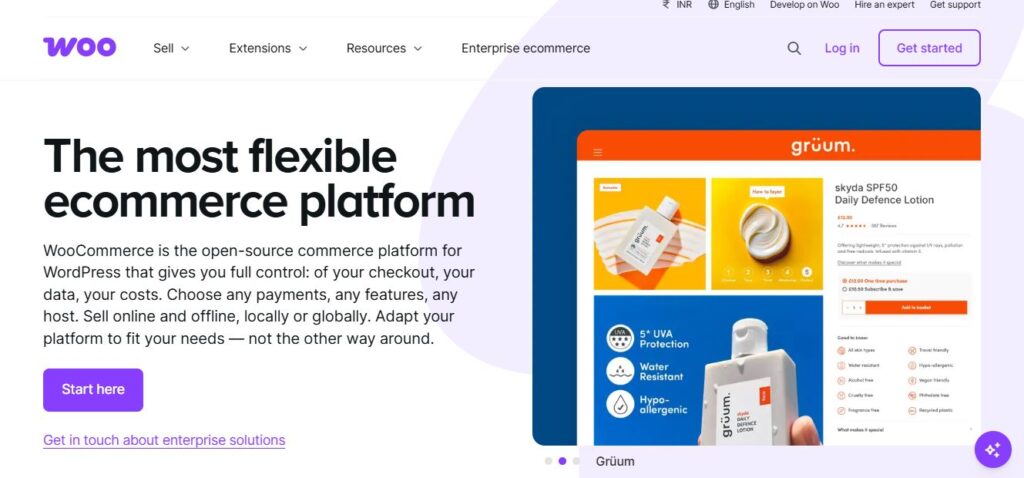
For WordPress users, WooCommerce is the ultimate free plugin turning any site into a powerhouse store, often ranked as the best ecommerce platforms for your business seeking total control. With over 1,000 extensions, it’s endlessly customizable without vendor lock-in.
Core Strengths
- Extensions Ecosystem: Add-ons for subscriptions, bookings, and multilingual support.
- Performance: Lightweight code ensures fast load times (under 2 seconds on optimized hosting).
- Community Support: Massive forums and free themes from the WordPress repository.
Core software is free, but hosting and extensions cost $10-100/month. It’s ideal for tech-savvy owners, though it requires manual security updates. In 2026, its integration with AI plugins enhances personalization.
4. Wix eCommerce
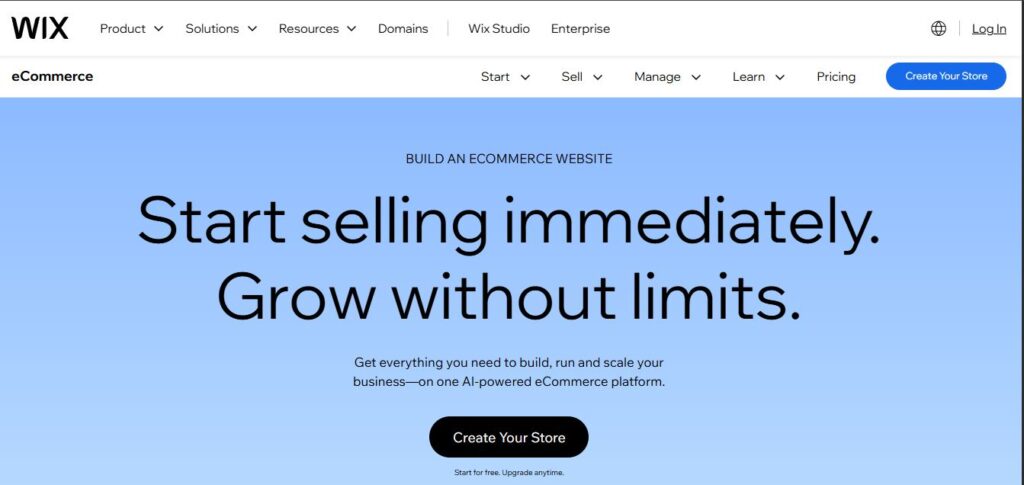
Wix combines stunning templates with ecommerce tools, earning its spot among the best ecommerce platforms for your business for creative solopreneurs. Its AI site builder generates a tailored store from a simple questionnaire.
Highlights
- Visual Editor: Drag-and-drop for product pages, galleries, and blogs.
- Payments: Wix Payments with 0% fees on premium plans; supports 140+ currencies.
- Marketing Tools: Built-in email campaigns and SEO wizard.
Starts at $27/month (Core). Pros include unlimited bandwidth, but storage limits (up to 50GB) may constrain large catalogs. Perfect for visual brands in 2026’s design-centric market.
5. Squarespace

Squarespace shines for its polished, designer-grade templates, a favorite in the best ecommerce platforms for your business for lifestyle and service-based shops. It handles up to 500 products with ease, focusing on storytelling through visuals.
Essential Tools
- Inventory Management: Real-time tracking with low-stock alerts.
- Extensions: Connects to Google Analytics and Mailchimp.
- Mobile Optimization: Responsive designs that convert 20% higher on phones.
Pricing from $26/month (Business). It’s less scalable for massive inventories but excels in user-friendly onboarding.
6. Magento
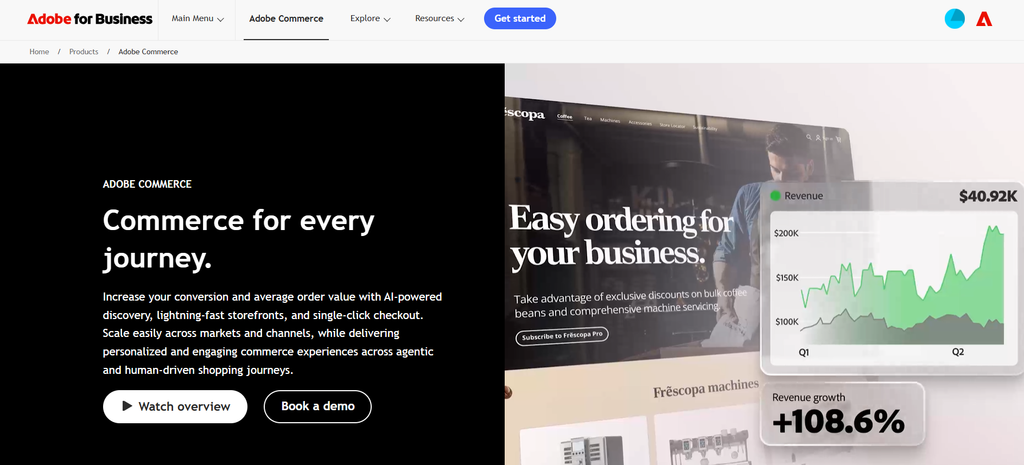
Magento suits enterprise-level operations with its open-source depth, one of the best ecommerce platforms for your business demanding heavy customization. Adobe’s backing adds cloud hosting and AI insights.
Advanced Features
- Multi-Store Management: Run multiple sites from one dashboard.
- B2B Tools: Quote systems and bulk pricing.
- Integrations: 3,000+ modules for ERP and CRM.
Community edition is free; Commerce starts at $2,000/year. Requires developers, but ROI is high for large-scale ops.
7. Ecwid
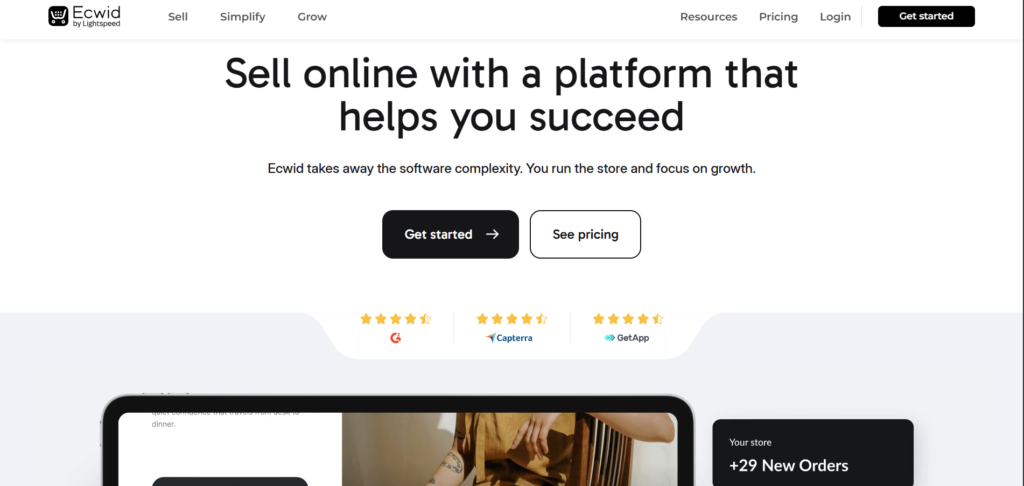
Ecwid integrates ecommerce into any platform (WordPress, Wix), ideal for the best ecommerce platforms for your business with established web presences. Sell on social media without a full rebuild.
Quick Wins
- Multi-Channel: Embed carts on Facebook or Instagram.
- Mobile App: Manage on-the-go.
- Pricing: Free for 10 products; $5/month starter.
Limitations include basic themes, but it’s cost-effective for starters.
8. Shift4Shop

Formerly 3dcart, Shift4Shop offers unlimited products and bandwidth, a strong contender in the best ecommerce platforms for your business for value-driven scaling. Free for Shift4 Payments users.
Value Propositions
- SEO Suite: On-page optimization and sitemaps.
- Dropshipping: Built-in supplier tools.
- Support: 24/7 chat and phone.
Free with payment processing; otherwise $29/month. Great for mid-tier growth without fees.
Final Thoughts
Choosing from these eight best ecommerce platforms for your business sets the foundation for 2026 growth. Shopify leads for versatility, while specialized picks like Magento handle complexity. Evaluate based on your unique goals start small, iterate fast, and watch sales soar.
Comments