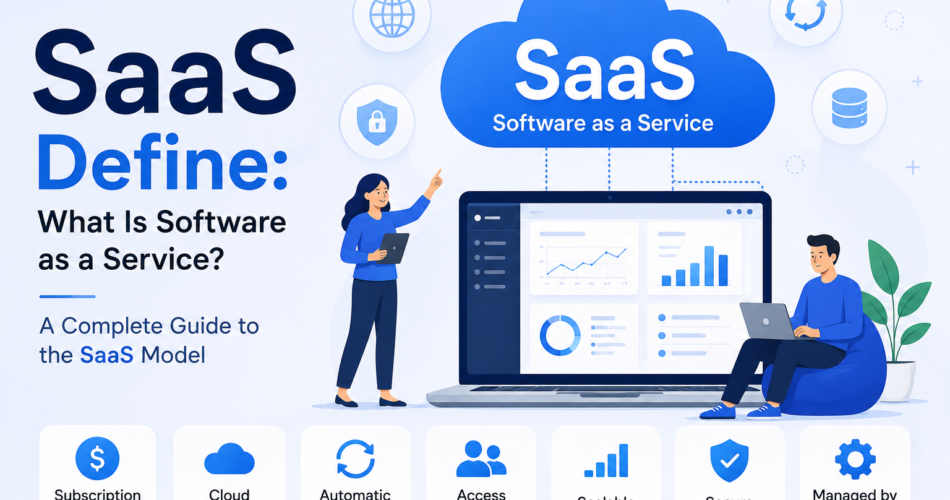
Many people search for a clear saas define explanation because the term appears everywhere in business and technology discussions. In simple terms, saas define means Software as a Service — a model where software is delivered over the internet through a subscription rather than installed on individual devices. This saas define approach has become the standard way most companies and individuals use applications in 2026.
This guide gives you a straightforward saas define answer, explains how the model works, lists practical benefits, and shares real examples so you can understand it fully and apply the knowledge when choosing tools.
What Does SaaS Define Actually Mean?
The core saas define is straightforward. Software as a Service (SaaS) is a cloud-based delivery method. A provider hosts the application, manages the servers, handles security, and releases updates. Customers simply log in through a web browser or mobile app and pay a recurring fee.
Unlike traditional software that required a large one-time purchase, local installation, and ongoing maintenance by the buyer, the modern saas define shifts almost all technical responsibility to the provider. You focus only on using the software.
This saas define model is similar to streaming services. You do not own the content permanently; you pay for continuous access. The same principle applies to business tools such as CRM platforms, email marketing systems, and e-commerce software.
Read also : What Is SaaS? Simple Definition, Examples & How It Works in 2026
How the SaaS Model Works in Practice
Understanding the saas define becomes easier when you see the process step by step:
- A company builds and hosts an application on cloud infrastructure.
- Customers subscribe and receive login credentials.
- Users access the software from any internet-connected device.
- The provider manages updates, security patches, data backups, and uptime.
- Customers can usually increase or decrease usage by changing their plan.
Most SaaS products use multi-tenant architecture. Multiple customers share the same core software while their data remains private and secure. This design supports the low-cost, high-scalability nature of the saas define model.
Main Benefits of the SaaS Approach
Businesses adopt the model described by saas define for several clear reasons:
- Lower initial costs compared with buying and maintaining traditional software.
- Rapid setup — most tools can be used within minutes or hours.
- Automatic updates so new features and security improvements arrive without extra work.
- Access from anywhere, supporting remote and hybrid teams.
- Predictable monthly or annual pricing that simplifies budgeting.
- Easy scaling when the number of users or required features grows.
In 2026 many platforms that follow this saas define model also include AI features for automation, reporting, and personalization. These additions make the software more valuable without requiring customers to manage complex infrastructure.
SaaS Compared with Traditional Software
A useful way to clarify the saas define is to contrast it with older software models:
- Traditional software usually needs a large upfront license fee and installation on local machines or servers.
- Updates and security patches become the customer’s responsibility.
- Scaling often requires buying more hardware or new licenses.
- Access is limited to specific devices.
By comparison, the approach outlined in any accurate saas define removes most of these burdens. The provider handles the technical layer while customers simply use the application.
Popular Real-World Examples
Everyday tools that match the saas define include:
- Productivity suites such as Google Workspace and Microsoft 365
- CRM platforms like Salesforce and HubSpot
- E-commerce solutions including Shopify
- Marketing tools such as Mailchimp, Klaviyo, and Omnisend
- Project management applications like Asana, ClickUp, and Trello
- Communication platforms including Slack and Zoom
These products all follow the same pattern: cloud delivery, subscription access, and continuous provider-managed updates.
SaaS, IaaS, and PaaS — Quick Clarification
The saas define sits alongside two other common cloud models:
- IaaS (Infrastructure as a Service) supplies virtual servers and storage. Customers manage the operating system and applications.
- PaaS (Platform as a Service) gives developers a ready environment to build and deploy software without managing infrastructure.
- SaaS delivers complete, ready-to-use applications — the model most end users experience.
For founders and marketers evaluating tools, the saas define is usually the most relevant category.
Potential Limitations to Keep in Mind
Even a clear saas define includes some trade-offs. Customers depend on the provider for uptime and data security. Customization options can be more limited than fully self-hosted software. Long-term subscription costs may exceed a one-time purchase in some cases. Data lives on the provider’s systems, so privacy policies and compliance standards matter.
Most small and mid-sized businesses find the advantages outweigh these points, especially when they choose established providers with strong security practices.
Read also : Best SaaS Blogs to Follow in 2026
Why Understanding SaaS Define Matters in 2026
The model captured by saas define continues to dominate because it matches how modern teams work. Companies need flexibility, remote access, frequent updates, and the ability to adopt new tools quickly. AI features now embedded in many platforms further increase the value of this approach.
When you compare software options, a solid grasp of the saas define helps you look beyond feature lists. You can evaluate total cost of ownership, ease of scaling, integration options, and the provider’s reliability.
Conclusion
The simplest saas define is this: Software as a Service delivers applications over the internet on a subscription basis. The provider manages the technology while customers focus on results.
This model has transformed how businesses buy and use software. From CRM and e-commerce platforms to marketing automation and collaboration tools, the approach described by saas define powers much of today’s digital workplace.
If you are selecting tools for your business, start with a clear understanding of your needs, then apply the principles in this saas define guide. The right choices can reduce technical overhead and help your team work more effectively in 2026 and beyond.
Comments