The year 2026 has solidified artificial intelligence as an indispensable partner for writers, marketers, authors, and professionals of every kind. What began as experimental chatbots a few years ago has matured into sophisticated systems that draft long-form articles, maintain consistent brand voices, optimize for search engines and AI answer engines, generate fiction that feels human, and refine everyday communication with remarkable nuance.
Writers no longer ask whether they should use AI. They ask which tool will actually improve their output without stripping away their voice. The market is crowded with options that range from general-purpose powerhouses to specialized platforms for SEO, fiction, or sales copy. After evaluating performance, writing quality, ease of use, pricing, unique features, and real-world reliability in mid-2026, here are the ten best AI writer tools available right now.
How These Tools Were Selected
Selection focused on five practical criteria:
- Quality and naturalness of generated text
- Specialized strengths (SEO, creative writing, marketing, editing)
- Usability and workflow integration
- Value relative to price
- Consistency and reliability based on recent user feedback and testing
No tool is perfect for every use case. The best choice depends on whether you need long-form blogs, fiction, high-volume marketing copy, or polished professional writing.
1. Claude

Claude continues to stand out in 2026 as the preferred choice for writers who care deeply about prose quality. Its latest models produce text that flows naturally, maintains consistent tone over thousands of words, and avoids the generic “AI voice” that still plagues many competitors.
Key strengths include exceptional long-context understanding, strong adherence to complex instructions, and a more thoughtful, less repetitive style. Claude excels at nuanced explanations, persuasive writing, and refining drafts until they feel genuinely human. Many professional writers now treat Claude as their primary drafting partner for articles, reports, and books, then use lighter tools for brainstorming or short-form work.
Pricing starts with a capable free tier and Pro at $20 per month (with higher Max tiers available for heavy users).
Best for: Long-form content, professional writing, anyone who prioritizes quality over pure speed.
2. ChatGPT
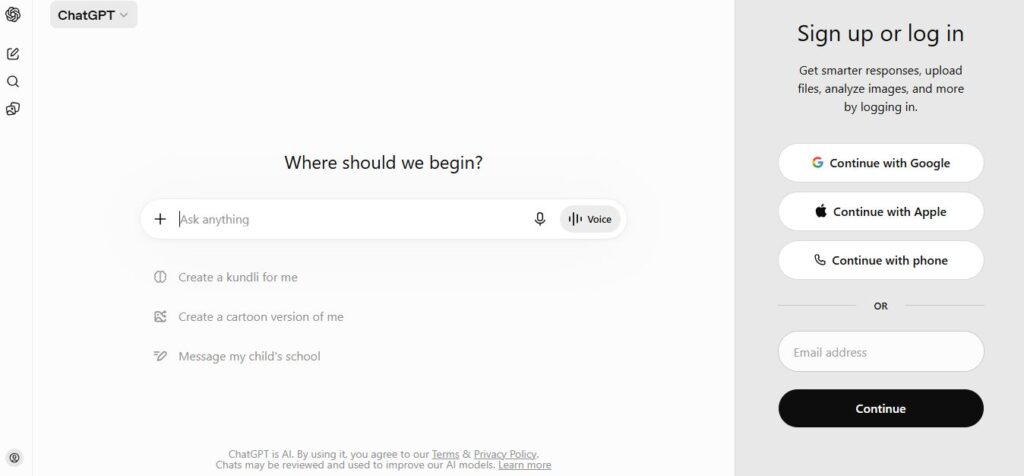
ChatGPT remains the most widely used and flexible AI writer in 2026. Its ecosystem of Custom GPTs, strong multimodal capabilities, and constant model improvements make it the Swiss Army knife of AI writing.
It shines at rapid ideation, generating multiple stylistic variations, structured outputs, research-assisted writing, and short-to-medium form content. The Canvas interface and iterative editing tools allow seamless refinement. While pure long-form prose sometimes feels slightly less polished than Claude’s, ChatGPT’s breadth and speed are unmatched for most everyday and marketing tasks.
Pricing: Free tier available; Plus typically $20 per month.
Best for: Brainstorming, versatile content creation, teams that need one tool for many jobs.
3. Jasper
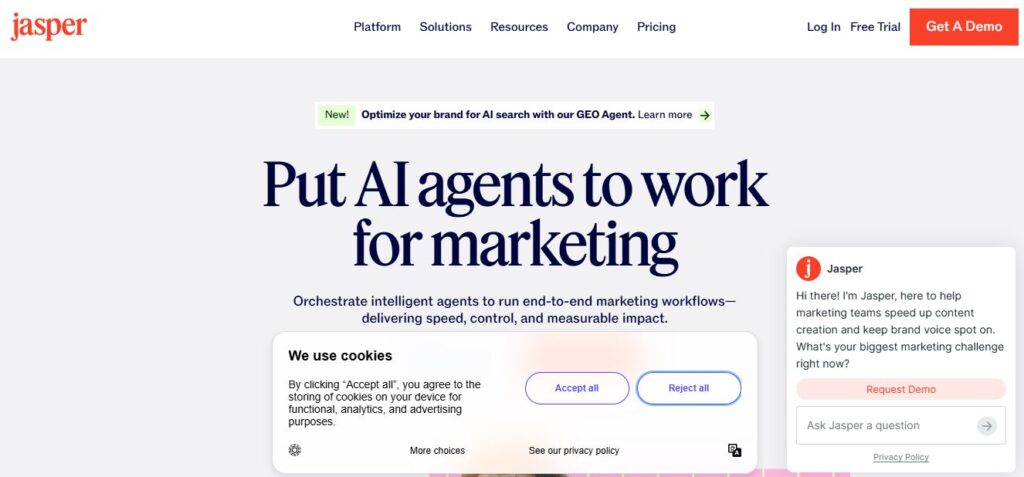
Jasper has evolved into a robust platform designed for marketing and content teams that need on-brand output at scale. Its Brand Voice and Jasper IQ features learn your style, terminology, and company knowledge so every piece of content stays consistent.
Content Pipelines automate workflows from brief to draft, while templates cover blogs, ads, emails, social posts, and landing pages. Integration with SEO tools further strengthens its position for marketing-focused users.
Pricing generally starts around $39–$69 per month depending on the plan and billing cycle.
Best for: Marketing teams, agencies, and brands that require consistent voice across high volumes of content.
4. Google Gemini

Gemini has become a formidable writing partner in 2026, especially for users already embedded in the Google ecosystem. Deep integration with Docs, Gmail, Sheets, and Drive allows it to pull context from your own files and real-time web data.
It handles research-heavy writing particularly well, generates solid first drafts, and offers convenient in-document editing tools. The ability to reference your existing documents and maintain style consistency across Google Workspace makes it highly practical for knowledge workers and collaborative teams.
Pricing: Free access with Google account; Advanced features via Google One AI Premium (around $20 per month).
Best for: Research-backed writing, Google Workspace users, and collaborative document workflows.
5. Writesonic
Best for SEO Content and AI Search VisibilityWritesonic has carved a strong niche by combining capable long-form generation with practical SEO tools and growing AI search (GEO) visibility features. Its article writer produces structured, search-optimized drafts, while supporting tools for titles, paraphrasing, and brand voice.

In 2026 it also tracks how brands appear in AI answers, giving content creators an edge as search continues to evolve beyond traditional rankings.
Pricing starts in the $39–$79 per month range on annual plans, with higher tiers for more volume and team features.
Best for: Content marketers focused on ranking and visibility in both traditional search and AI overviews.
6. Surfer AI

Surfer remains the gold standard for writers who want content that actually ranks. Rather than generating text in isolation, it analyzes top-performing pages for a target keyword and provides a real-time content score, keyword guidance, heading structure, and optimization checklist.
The AI writing features work best as a companion either generating drafts guided by Surfer’s data or optimizing human or other-AI drafts. Integration with Google Docs and WordPress keeps the workflow smooth.
Pricing typically starts around $69–$99 per month.
Best for: SEO specialists and content teams obsessed with search performance.
7. Copy.ai
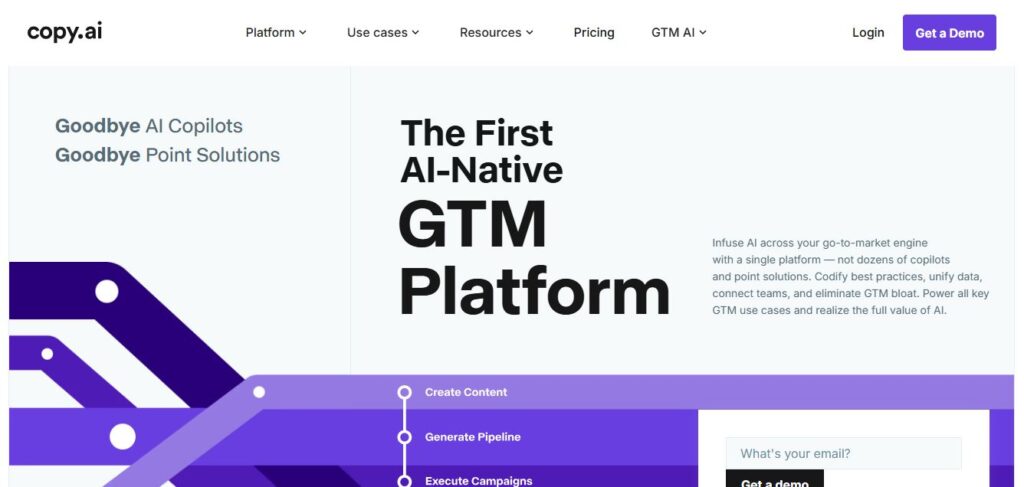
Copy.ai has shifted toward go-to-market and sales enablement while remaining excellent for quick, high-quality short-form content. It excels at personalized outreach, ad copy, email sequences, and social posts. Workflow automation and prospect research features make it especially valuable for revenue teams.
Pricing offers a free tier with paid plans starting around $29–$49 per month.
Best for: Sales teams, marketers needing fast conversion-focused copy, and GTM workflows.
8. Sudowrite
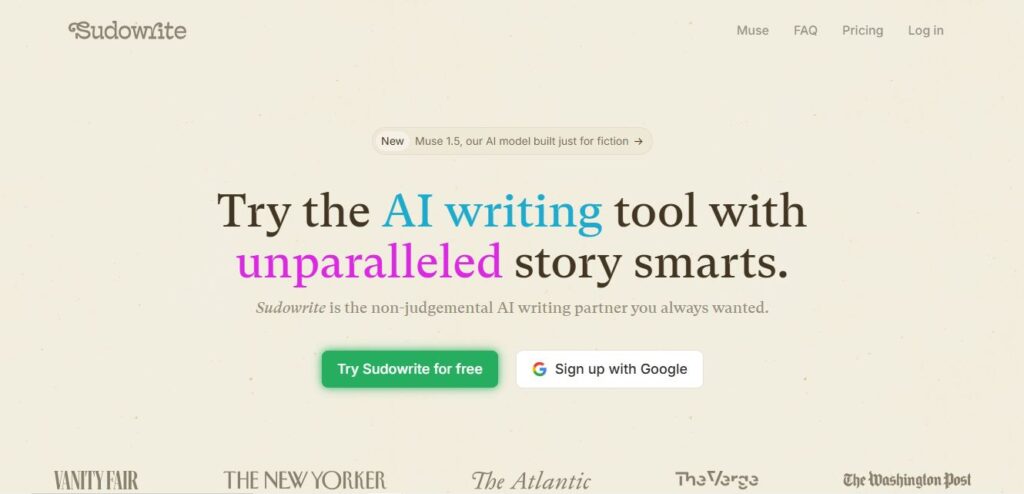
For novelists, short-story writers, and anyone working on narrative, Sudowrite is purpose-built. Features such as Story Bible (for tracking characters, plot, and world details), Describe (for sensory expansion), and Write (for continuing in the author’s voice) help overcome blocks and enrich scenes without taking over the creative process.
It understands the needs of fiction far better than general-purpose tools.
Pricing starts around $19 per month after a trial.
Best for: Authors of fiction, screenwriters, and creative storytellers.
9. Grammarly
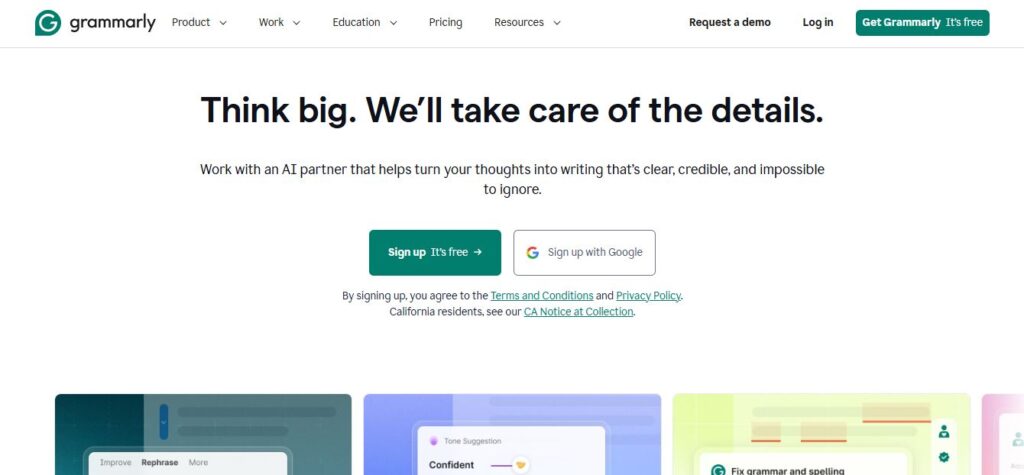
Grammarly has expanded far beyond basic grammar checking. Its generative features now rewrite sentences, adjust tone, humanize AI-generated text, and improve clarity across emails, documents, and web forms. The browser extension and integrations make it almost invisible yet constantly useful.
It is less of a full draft generator and more of an essential finishing tool that elevates whatever you (or another AI) produce.
Pricing: Robust free plan; Pro starts around $12–$30 per month depending on billing.
Best for: Anyone who writes regularly and wants cleaner, more professional final output.
10. Rytr
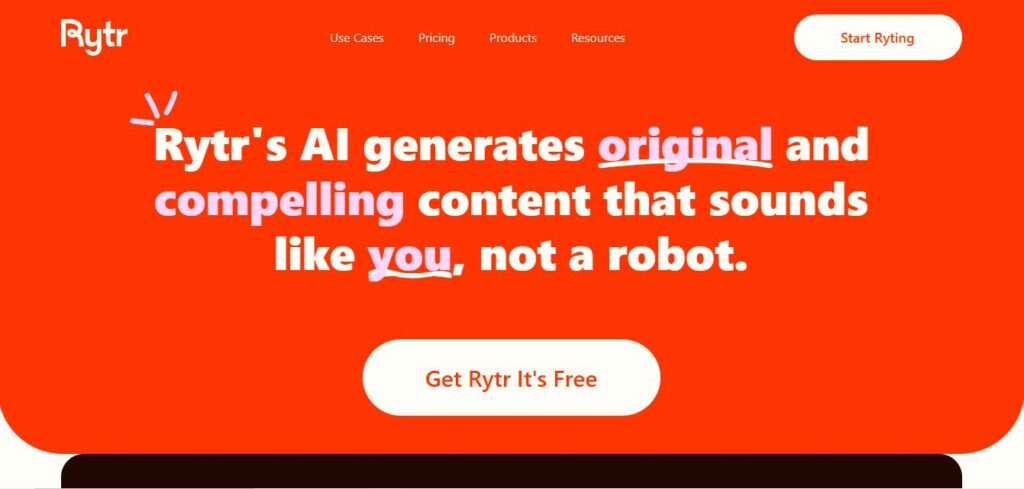
Rytr delivers surprising value for individual creators and small businesses. With dozens of templates, multiple tones and languages, and solid short-to-medium form generation, it covers the essentials without the high price of enterprise tools.
While it may not match the depth of Claude or the SEO sophistication of Surfer for complex projects, it remains one of the most accessible entry points into quality AI writing.
Pricing: Free plan with limited characters; paid plans from about $9 per month.
Best for: Freelancers, beginners, and anyone needing affordable everyday content generation.
Quick Comparison Overview
| Tool | Best Strength | Starting Price (approx.) | Ideal User |
|---|---|---|---|
| Claude | Natural long-form prose | $20/mo | Professional writers |
| ChatGPT | Versatility & speed | $20/mo | General users & teams |
| Jasper | Brand consistency at scale | $39–69/mo | Marketing teams |
| Gemini | Research + Google integration | $20/mo | Workspace users |
| Writesonic | SEO + AI visibility | $39–79/mo | Content marketers |
| Surfer AI | Data-driven optimization | $69–99/mo | SEO specialists |
| Copy.ai | Sales & short-form copy | $29–49/mo | Sales/marketing teams |
| Sudowrite | Fiction & storytelling | $19/mo | Authors |
| Grammarly | Editing & refinement | Free / $12+ | Everyone |
| Rytr | Affordable everyday writing | $9/mo | Budget-conscious creators |
Getting the Most from AI Writers in 2026
The highest-performing users treat these tools as collaborators rather than replacements. Strong prompts that include audience, tone, structure, examples, and constraints consistently outperform vague requests. Combining tools often yields the best results Claude or ChatGPT for the core draft, Surfer for optimization, and Grammarly for final polish. Always fact-check, inject personal insights or original research, and edit for voice. AI accelerates the process; human judgment and creativity still determine whether content connects.
Looking Ahead
As models continue to improve in reasoning, long-context handling, and personalization, the gap between AI-assisted and purely human writing will narrow further. Tools that integrate brand knowledge, real-time data, SEO/AEO signals, and collaborative workflows will pull ahead. The winners in 2026 and beyond will be the platforms that help writers work faster while preserving authenticity and strategic thinking.
Comments